|
|
Anna Himmelman Martinson was eighty-one years old and suffering from lung cancer when I met her the next afternoon, July 7th, 1995 at the Rothstein Elderhaus in Berlin, an exclusive senior citizens complex with elegant individual suites. A nurses aide served as an interpreter and that may be the reason that Anna thought I was a historian covering the family history. I attempted to explain my interest as an artist in KirchnerÕs shoe. This as well was misinterpreted and she began to talk about her uncle Jon and his noble service to members of Die Brucke. He was the one who kept the secrets, how he helped invent the stories and howwell he positioned the artists for lives of notoriety. I began to feel that senility was driving the dialog until she stated that Ò the shoe and the photos were always kept in the family, just like the in between work of Die BruckeÓ. I told her that I had spoken to Thomas Schuler about the photos. She became agitated and said that Schuler had been after the family fortune for years. I mentioned KirchnerÕs shoe again and Ms. Himmelman responded by issuing an emotional sermon on how The Himmelman Family is responsible for Die BruckeÕs place in history. Jon Himmelman began by removing all transition type painting
and drawings from the studio in Dresden before any exhibitions or visits
by collectors. These he stored in an adjoining shed, which he often used
as an open air studio. Many of the transition pieces were destined to
be destroyed I was following the story fine until the footbath part began. I interrupted, hoping to redirect the flow. Footbaths? I directed the question at the nurses aide. The soaking of feet she replied. Anna continued. ÒDie Brucke was about painÓ The bridge between the outside pain and the inside pain. The outside pain was the world and the inside pain was in the feet. The feet control the body, the body controls the brush , the brush makes the art. I mentioned that historically Die Brucke and German Expressionism in general |
were known to be influenced by a number of elements, notably
a change from past Germanic art styles, a response to the social and political
climate, views of exotic lands, and especially color. Ms. Himmelman regarded
me as a failing student. ÒThe country was gray, the streets were gray,
old art was gray, the pain was colored. The shoes made the feet bleed.
The blood was red.Ó With this exclamation, Anna shouted orders at the
aide and gestured down the hall. I I wondered for a moment if there werenÕt larger garment boxes in AnnaÕs other room. The only artwork hanging on the wall were the two Kirchner woodcuts, modest in size and quality. Ò This is the end of the storyÓ she announced. ÒThis is the real one, but I kept it long enough so now no one will believe you or care. Except Schuler, and he will never see this box, I am giving it all to the doctors, the Archive and Museum get nothing.Ó The secret Òcult of the footÓ was what Thomas Schuler had been after since 1959.He had the shoe in his possession at the National Archive for over thirty years and never connected it to anything but a New YearÕs Costume party at the Dresden studio in 1911. |
|
HOME | FEATURES | GALLERY | OPENINGS | CONTACT Website design ©Jennifer Moulios, Moulios Multimedia 1999,2000. All Bill Rock original artwork © Bill Rock 1999,2000. All rights reserved. No portion of this site may be copied,reproduced or reused in any way without written permission by Bill Rock and Jennifer Moulios |
 by
the artists themselves once a study was complete, others would have been
offered to the public, potentially jeopardizing the groupÕs reputation
as the new masters of painting, if it were not for JonÕs silent editing
process. By the time the original studio members seperated around 1912,
Himmelman had ÒeditedÓ over 140 drawings, painting, woodcuts and posters.
These included works by Mueller, Heckel, Kirchner, and Pechstein. Anna
stressed that the artists knew about the editing and appreciated someone
in the group, but not a direct member, serving as a critical voice. What
Jon did with the work was never questioned and how could they? Jon worked
for practically nothing and spent the majority of his time heating water
and changing footbaths for the artists, especially Ernst (Kirchner).
by
the artists themselves once a study was complete, others would have been
offered to the public, potentially jeopardizing the groupÕs reputation
as the new masters of painting, if it were not for JonÕs silent editing
process. By the time the original studio members seperated around 1912,
Himmelman had ÒeditedÓ over 140 drawings, painting, woodcuts and posters.
These included works by Mueller, Heckel, Kirchner, and Pechstein. Anna
stressed that the artists knew about the editing and appreciated someone
in the group, but not a direct member, serving as a critical voice. What
Jon did with the work was never questioned and how could they? Jon worked
for practically nothing and spent the majority of his time heating water
and changing footbaths for the artists, especially Ernst (Kirchner).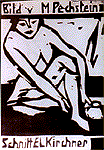 thought
the visit was over. The aide excused herself and left the room for a moment
and returned with a large garment box. She placed it on the floor between
us. Anna motioned toward the box and said to open it. Under the yellowed
newspaper packing was an antique black leather lace-up shoe. It was a
womanÕs shoe or what I percieved to be what a woman probably wore around
the turn of the century with the exception of the heel. The heel was wide
and at least six or seven inches tall making the shoe appear as a miniature
playground slide more than footwear. I couldnÕt imagine anyone walking
in it. ÒLook insideÓ directed Anna. I pulled back the long stiff tongue
revealing a well worn interior with black stains of some sort originating
from the toe area. I was informed that this was dried blood. ÒSo you see
the Kirchner shoeÓ. Ms. Himmelman interrupted my stupor of wonder. ÒSo
much fashion is with art. Die Brucke was not just paint it was life. Life
is in the feet, so the shoe must reflect the life. This shoe reflected
the life of art. All of them(referring to the artists) wore the art shoes
in and out of the studio.Ó Anna reached into the box and retrieved a large
packet of photographs. At first glance they appeared to be medical photographs
of the human foot, but upon closer examination it was obvious that these
were taken in a studio setting. Easels and canvases can be seen along
the border and in the background of some of them. The foot celebration
was secretly the foot suffering. Jon would send the photographs to the
doctors in Munich and Berlin for advice on how to best treat the recurring
ailments caused by the shoes. The letters accompanying the packets of
photographs were from Die Brucke artists addressed to friends and family
around the country. They are obviously ÒeditedÓ by Jon for they bore no
postmark and all of them contained passages describing the foot pain,
the endless hours standing at easels in mis-shapened shoes, the foot soaks
and the vibrant colors of pain.
thought
the visit was over. The aide excused herself and left the room for a moment
and returned with a large garment box. She placed it on the floor between
us. Anna motioned toward the box and said to open it. Under the yellowed
newspaper packing was an antique black leather lace-up shoe. It was a
womanÕs shoe or what I percieved to be what a woman probably wore around
the turn of the century with the exception of the heel. The heel was wide
and at least six or seven inches tall making the shoe appear as a miniature
playground slide more than footwear. I couldnÕt imagine anyone walking
in it. ÒLook insideÓ directed Anna. I pulled back the long stiff tongue
revealing a well worn interior with black stains of some sort originating
from the toe area. I was informed that this was dried blood. ÒSo you see
the Kirchner shoeÓ. Ms. Himmelman interrupted my stupor of wonder. ÒSo
much fashion is with art. Die Brucke was not just paint it was life. Life
is in the feet, so the shoe must reflect the life. This shoe reflected
the life of art. All of them(referring to the artists) wore the art shoes
in and out of the studio.Ó Anna reached into the box and retrieved a large
packet of photographs. At first glance they appeared to be medical photographs
of the human foot, but upon closer examination it was obvious that these
were taken in a studio setting. Easels and canvases can be seen along
the border and in the background of some of them. The foot celebration
was secretly the foot suffering. Jon would send the photographs to the
doctors in Munich and Berlin for advice on how to best treat the recurring
ailments caused by the shoes. The letters accompanying the packets of
photographs were from Die Brucke artists addressed to friends and family
around the country. They are obviously ÒeditedÓ by Jon for they bore no
postmark and all of them contained passages describing the foot pain,
the endless hours standing at easels in mis-shapened shoes, the foot soaks
and the vibrant colors of pain.